
blog

Escaping the Heart Disease Medical Web: A Root Cause Roadmap

Escaping the Heart Disease Medical Web: A Root Cause Roadmap

Escaping the Heart Disease Medical Web: A Root Cause RoadmapJuliana Mazzeo
Published on: 22/02/2026

Trapped in the medical web? Watching your blood sugar, blood pressure, and cholesterol creep toward disease while doctors tell you to "wait and see"? This comprehensive guide reveals why the medical system waits until you're sick enough to medicate—and how to escape before it's too late. Discover the single root cause connecting your rising blood pressure, climbing glucose, abnormal cholesterol, and expanding waistline: insulin resistance and metabolic syndrome. Learn why your doctor treats these as five separate problems requiring five different medications, when they're actually five symptoms of one underlying dysfunction. This post breaks down the three-stage roadmap to metabolic healing: Investigation (finding the gold nuggets in your existing labs), Elimination & Support (addressing root causes through targeted nutrition), and Optimization (building sustainable metabolic health). Follow Maria's journey from pre-diabetic, pre-hypertensive, and headed toward multiple medications to completely reversing all metabolic syndrome markers in six months—without a single prescription. If you're a woman over 40 watching your cardiovascular risk increase while being told you're "not quite sick enough," this is your permission slip to investigate now. Heart disease isn't inevitable. Metabolic syndrome is reversible. And you don't have to wait for disease to take control of your health.
Hearthealth
Why Your Cholesterol Numbers Tell the Wrong Story

Why Your Cholesterol Numbers Tell the Wrong Story

Why Your Cholesterol Numbers Tell the Wrong StoryJuliana Mazzeo
Published on: 15/02/2026

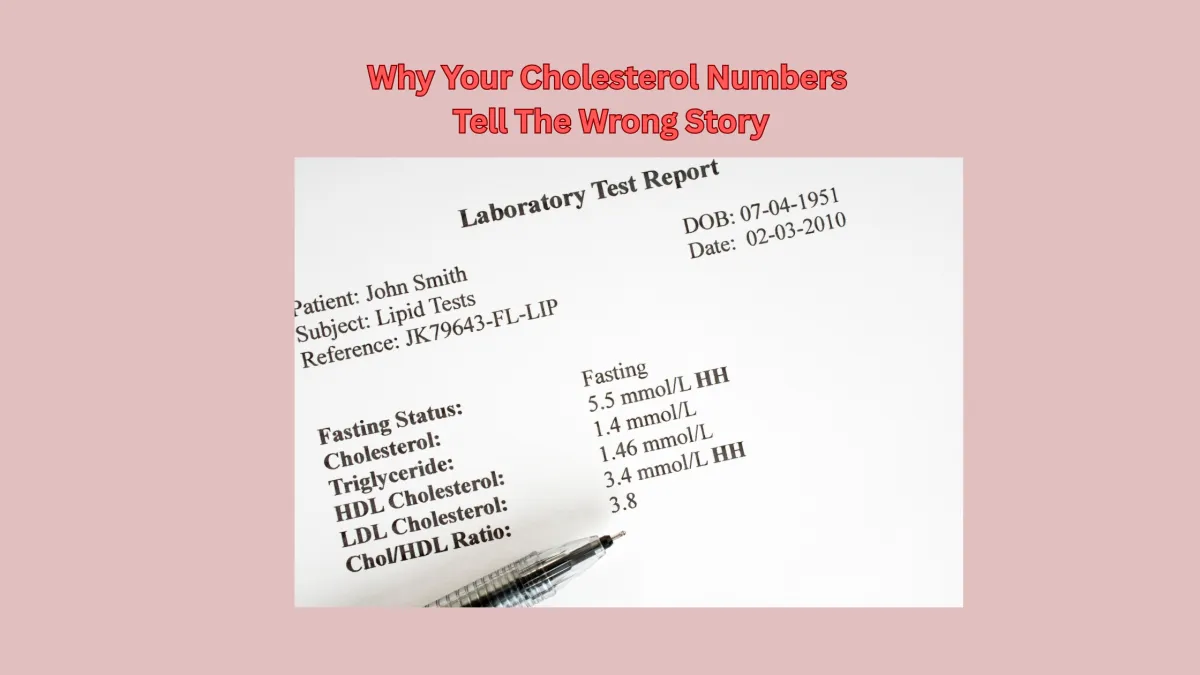
Your doctor wants to put you on a statin because your LDL is 145. But did they check your triglyceride/HDL ratio? Did they measure particle size versus particle number? Did they investigate WHY your body is producing dangerous cholesterol patterns in the first place? This eye-opening post exposes the incomplete cholesterol story you've been told for decades and reveals what actually drives cardiovascular risk. Learn why total cholesterol and LDL numbers alone tell you almost nothing about heart disease risk—and which markers actually predict cardiovascular events. Discover the critical difference between large, fluffy (harmless) LDL particles and small, dense (dangerous) ones—and why standard cholesterol tests lump them all together. Understand how insulin resistance drives abnormal cholesterol patterns, low HDL, and elevated triglycerides, creating the perfect storm for heart disease. Follow Jennifer's journey from being pressured onto a statin to addressing her root cause—insulin resistance—and transforming all her cardiovascular markers in eight months. Her total cholesterol? Still 215. Her LDL? Still 140. But her actual heart disease risk? Plummeted. If you've been told you need a statin based on your cholesterol numbers alone, this post gives you the questions to ask and the markers to request. Because lowering a number without addressing why it's elevated isn't prevention—it's symptom management.

Hearthealth
The Blood Sugar Roller coaster Destroying Your Heart (Even If You're Not Diabetic)

The Blood Sugar Roller coaster Destroying Your Heart (Even If You're Not Diabetic)

The Blood Sugar Roller coaster Destroying Your Heart (Even If You're Not Diabetic)Juliana Mazzeo
Published on: 15/02/2026

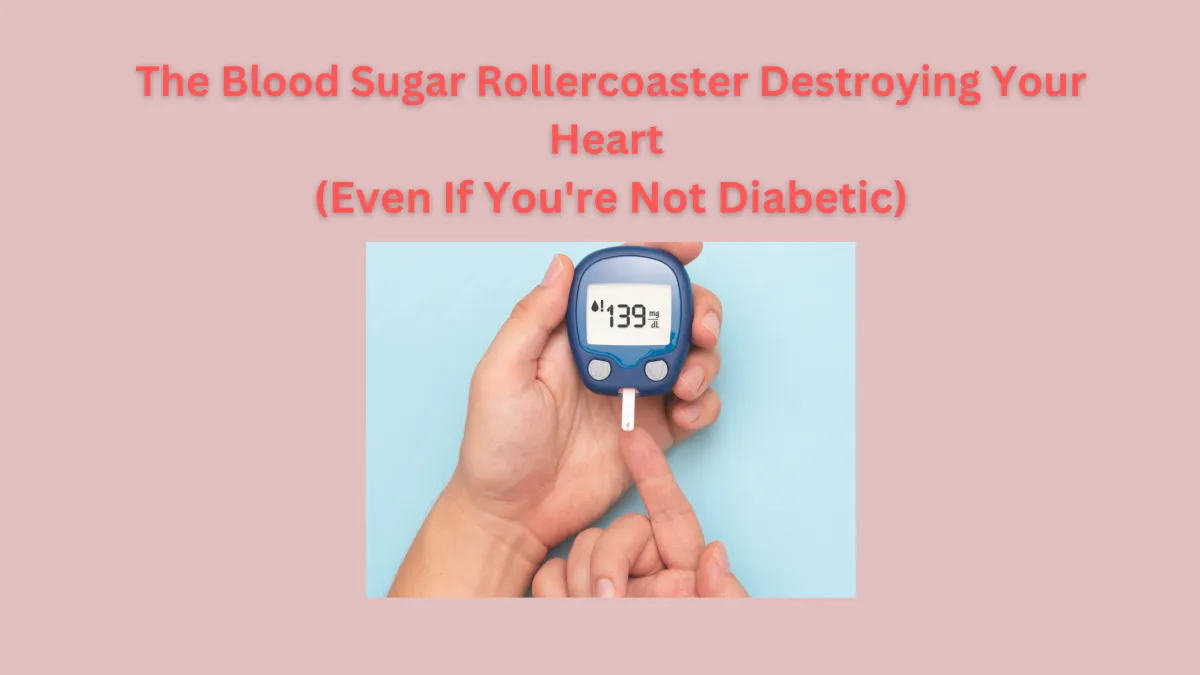
Your fasting glucose is 92. Your doctor says you're nowhere near diabetic. But you crash every afternoon at 3 PM, get shaky between meals, struggle with brain fog, and can't lose weight no matter what you do. What's happening the other 23 hours and 45 minutes of the day when your doctor isn't checking your blood sugar? This revealing post exposes the dangerous blood sugar rollercoaster destroying your cardiovascular system—even with "normal" fasting glucose. Learn why blood sugar variability (the constant spiking and crashing) causes more arterial damage than slightly elevated but stable glucose levels. Discover how every spike above 120 mg/dL glycates proteins, creates oxidative stress, triggers inflammation, and damages the delicate endothelial cells lining your blood vessels. Understand why checking fasting glucose once a year is like checking your bank balance on January 1st and assuming you know your entire financial health. Follow Lisa's journey from "perfect" labs (fasting glucose 92, A1C 5.4%) to discovering her fasting insulin was nearly triple optimal—revealing a blood sugar rollercoaster her doctor never saw. Six months later: stable energy all day, 18 pounds gone, and cardiovascular risk eliminated. If you experience afternoon crashes, shakiness between meals, or brain fog, your blood sugar is more unstable than your annual fasting glucose reveals. And your heart is paying the price.

Hearthealth
The Heart Attack Your Labs Predicted (That Your Doctor Missed)

The Heart Attack Your Labs Predicted (That Your Doctor Missed)

The Heart Attack Your Labs Predicted (That Your Doctor Missed)Juliana Mazzeo
Published on: 01/02/2026

Trapped in the medical web? Watching your blood sugar, blood pressure, and cholesterol creep toward disease while doctors tell you to "wait and see"? Tips on how to escape before it's too late.

Hearthealth
My Friend Spent $1,200 to Feel Sick For Two Weeks (What Her Doctor Didn't Tell Her About Weight Loss)

My Friend Spent $1,200 to Feel Sick For Two Weeks (What Her Doctor Didn't Tell Her About Weight Loss)

My Friend Spent $1,200 to Feel Sick For Two Weeks (What Her Doctor Didn't Tell Her About Weight Loss)Juliana Mazzeo
Published on: 19/01/2026

Margaret's doctor prescribed expensive weight loss injections without mentioning safer alternatives. Here's what happened next - and what every woman over 40 needs to know before choosing a weight loss program.

Weightloss

© Copyright 2026 | All Rights Reserved Nutrition Wellness | Terms & Conditions